5 Best Butternut Squash Recipes — Easy, Golden and Homemade from Scratch

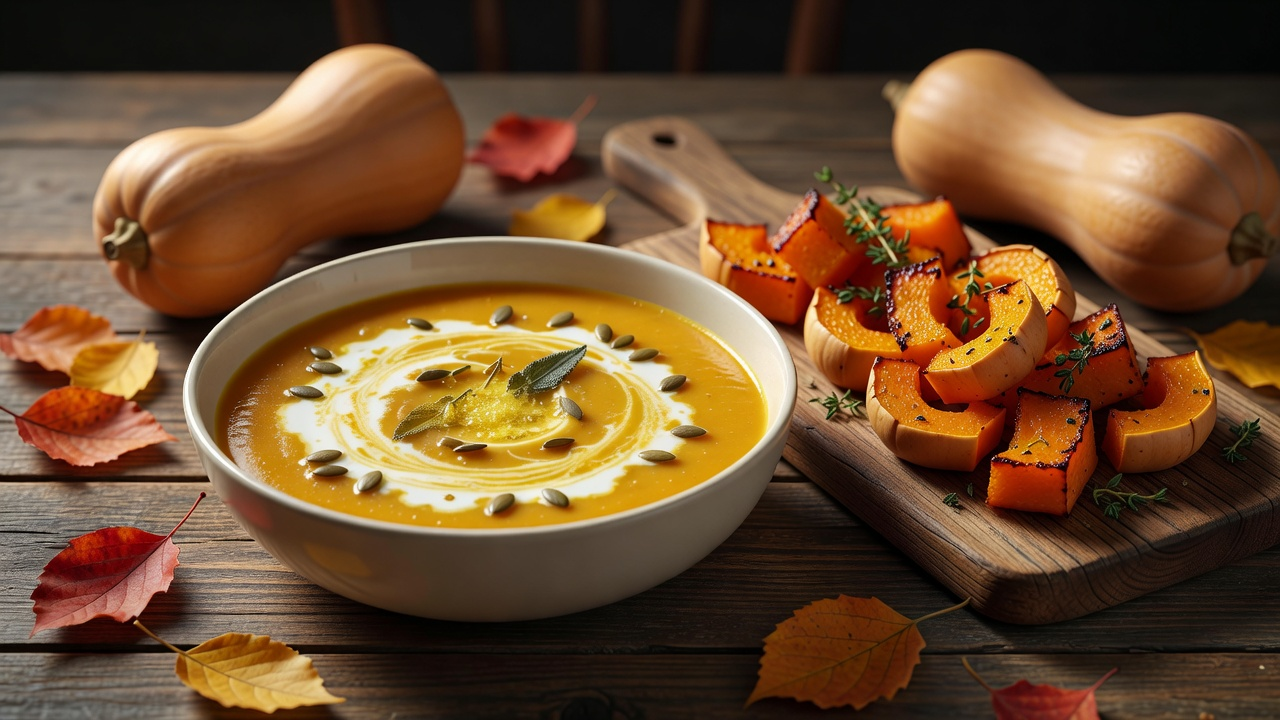
There is something genuinely magical about butternut squash recipes in autumn — the moment that golden, nutty squash hits the oven, your kitchen fills with a warm, caramelized sweetness that feels like the season itself. These homemade butternut squash recipes transform one of nature’s most versatile vegetables into deeply satisfying, beautifully presented dishes that work for any occasion.
From a silky roasted butternut squash soup to a golden caramelized side dish, every recipe on this list is simple, warming, and completely irresistible. Whether you are cooking for a cozy fall dinner recipe night or planning your Thanksgiving side dish spread, these are the recipes that will define your entire autumn season.
Table of Contents
- Why You’ll Love These Butternut Squash Recipes .. ↓
- What Makes Homemade Butternut Squash Better …… ↓
- Ingredients You’ll Need …………………….. ↓
- 5 Best Butternut Squash Recipes — Step by Step .. ↓
- Serving Suggestions ………………………… ↓
- Tips for Best Results ………………………. ↓
- Storage Tips ………………………………. ↓
- Frequently Asked Questions ………………….. ↓
- Final Thoughts …………………………….. ↓
Why You’ll Love These Butternut Squash Recipes
- Naturally Sweet and Deeply Flavored — Butternut squash develops a beautifully caramelized, nutty sweetness when roasted that no other vegetable can replicate, making every recipe built around it taste genuinely special and deeply comforting without requiring complex techniques or long ingredient lists.
- One Vegetable — Endless Recipes — From creamy butternut squash soup to golden roasted side dishes, stuffed squash, and hearty pasta sauces, a single butternut squash can be transformed into a completely different, equally delicious meal each time you cook it throughout the entire autumn season.
- Incredibly Nutritious and Filling — Butternut squash is naturally rich in Vitamin A, Vitamin C, fiber, and potassium, making these easy butternut squash recipes as genuinely nourishing and wholesome as they are beautiful, satisfying, and deeply delicious for the whole family.
- Perfect for Meal Prep — All butternut squash recipes in this collection store and reheat beautifully, making them ideal for batch-cooking on a Sunday afternoon and enjoying throughout the week as effortless, deeply satisfying fall dinner recipe meals with zero additional effort.
- Stunning for Holiday Entertaining — The deep golden color, the warming autumnal aroma, and the beautiful natural presentation of butternut squash dishes make them the most visually impressive Thanksgiving side dish addition to any holiday table that guests will genuinely remember and request again next year.
[AD BREAK 1]
What Makes Homemade Butternut Squash Better
Pre-packaged butternut squash soups and frozen side dishes are convenient, but they are almost always watery in texture, muted in flavor, and missing the deep caramelization that makes homemade butternut squash recipes so extraordinary. When you roast fresh butternut squash from scratch, the natural sugars caramelize in the oven into something with a rich, concentrated sweetness that processed versions simply cannot replicate. The aroma alone filling your kitchen during roasting is worth every minute of the simple preparation.
Homemade also means you control the seasoning, the texture, and the richness of every dish you make. You can make the soup as velvety and thick as you love, roast the squash as golden and caramelized as you prefer, and season everything with the exact combination of herbs and spices that your family enjoys most. This level of personal control produces best butternut squash recipes for beginners that taste confidently personalized and genuinely homemade in a way that no shortcut version ever can.
Ingredients You’ll Need
Main Ingredients
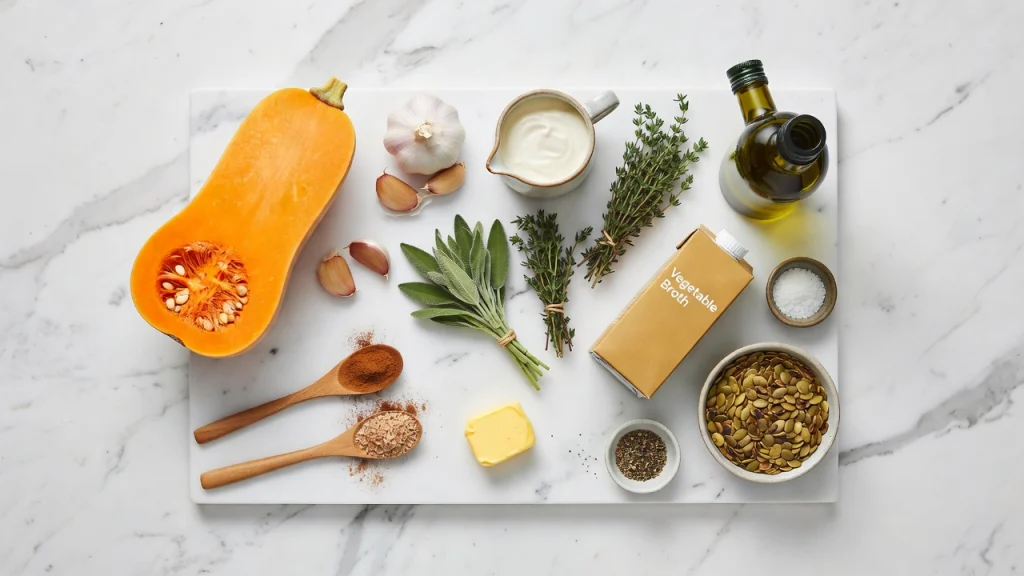
- Fresh Butternut Squash — The undisputed star of every butternut squash recipe on this list. Choose a squash that feels heavy for its size with a firm, unblemished beige skin — this indicates peak ripeness and the highest natural sugar content, which produces the deepest caramelization, the richest orange color, and the most intensely sweet, nutty flavor when roasted or puréed.
- Extra Virgin Olive Oil — Used generously for roasting the squash to golden perfection and for building the flavor base of the soup. A good-quality extra virgin olive oil adds a fruity, peppery richness that complements the natural sweetness of the squash beautifully and helps every surface caramelize evenly in the oven.
- Fresh Garlic — A whole head of roasted garlic added to the butternut squash during roasting mellows into a sweet, deeply savory paste that blends seamlessly into soups and sauces, adding a complex depth of flavor that raw or powdered garlic simply cannot match in these easy butternut squash recipes.
- Vegetable or Chicken Broth — The cooking liquid that transforms roasted butternut squash into a beautifully silky soup. A good-quality, well-seasoned broth that you would happily drink on its own produces a soup base that is deeply flavorful from the very first spoonful.
- Heavy Cream — Stirred into the blended butternut squash soup just before serving, a generous pour of heavy cream creates a luxuriously velvety texture and a beautiful ivory swirl on the surface that makes every bowl look genuinely stunning and professionally presented.
- Fresh Sage and Thyme — The two herbs most naturally and perfectly suited to any homemade butternut squash recipe. Sage fried in butter until crisp adds a nutty, aromatic depth that pairs with the squash’s sweetness in an extraordinary way, while fresh thyme adds a woody herbal warmth that runs beautifully through every bite.
- Ground Cinnamon and Nutmeg — A small but crucial pinch of both spices added to the soup or roasting seasoning takes the natural sweetness of the butternut squash to a warm, gently spiced depth that makes every recipe feel genuinely seasonal, comforting, and completely reminiscent of the best of autumn cooking.
Optional Add-Ins
- Toasted Pepitas — Scattered over the finished soup or roasted squash just before serving, toasted pumpkin seeds add a satisfying crunch, a nutty depth, and a beautiful visual contrast of green against the deep golden orange of the finished dish.
- Maple Syrup — A small drizzle of pure maple syrup over roasted butternut squash before it goes into the oven deepens the caramelization dramatically and adds a warm, woodsy sweetness that makes the finished dish taste like the most beautiful expression of autumn on a plate.
- Crumbled Feta Cheese — Scattered over warm roasted butternut squash just before serving, crumbled feta adds a sharp, salty, tangy contrast that cuts beautifully through the sweetness of the squash and creates one of the most surprisingly delicious flavor combinations in all of fall cooking.
💡 DID YOU KNOW?
🎃 Butternut squash is technically a fruit, not a vegetable — it develops from the flower of the plant and contains seeds, which botanically classifies it as a fruit in the same category as tomatoes, cucumbers, and zucchini. However, its savory, starchy character makes it culinarily one of the most versatile and beloved vegetables of the entire autumn season!
🧡 The deep orange color of butternut squash comes from beta-carotene — the same powerful antioxidant found in carrots — which the body converts directly into Vitamin A. One cup of cooked butternut squash provides over 400% of the daily recommended Vitamin A intake, making these beautiful butternut squash recipes as powerfully nutritious as they are delicious!
5 Best Butternut Squash Recipes — Step by Step
Recipe 1 — Creamy Roasted Butternut Squash Soup

Preheat your oven to 400°F (205°C). Cut the butternut squash in half lengthwise, brush both cut surfaces generously with olive oil, season with salt, pepper, cinnamon, and nutmeg, then place cut-side down on a lined baking sheet alongside a whole garlic head and fresh sage sprigs. Roast for 40 to 45 minutes until the flesh is completely tender and the cut surfaces have caramelized to a deep, gorgeous amber color. This cut-side-down roasting method is the professional technique for how to make butternut squash recipes from scratch with maximum caramelization and depth.
Once roasted and slightly cooled, scoop the flesh into a blender along with the squeezed roasted garlic, warm vegetable broth, and a generous pour of heavy cream. Blend on high speed for 60 to 90 seconds until completely smooth, velvety, and a stunning deep orange color with no lumps remaining. Season generously with salt, black pepper, and an extra pinch of cinnamon, then taste and adjust until every flavor is in perfect balance.
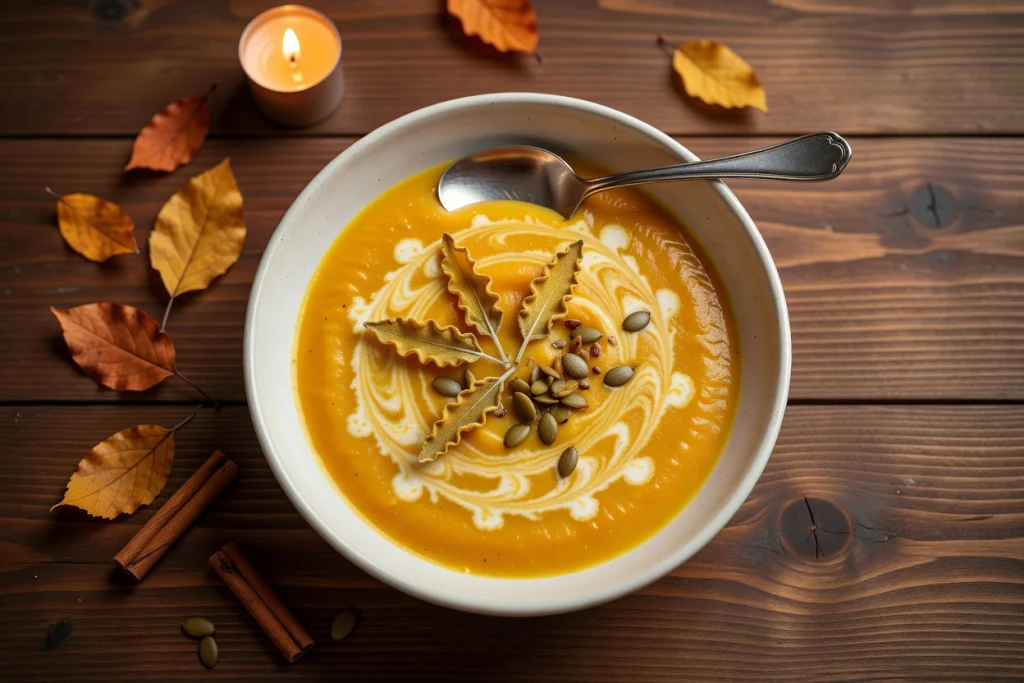
Fry fresh sage leaves in golden brown butter for 30 seconds per side until crisp and deeply aromatic, then serve the finished soup in deep ceramic bowls with a swirl of cream, the crispy fried sage leaves, and a generous scatter of toasted pepitas for crunch. This easy butternut squash soup with cream and garlic is the most requested dish in this entire collection and the recipe that makes everyone ask for seconds without exception.
💡 Pro Tip: Always roast butternut squash cut-side down directly on the pan surface — this direct contact with the hot metal caramelizes the cut surface into a deep, concentrated amber that adds extraordinary depth to the finished soup that cut-side-up roasting can never achieve.
Recipe 2 — Golden Roasted Butternut Squash with Sage Butter
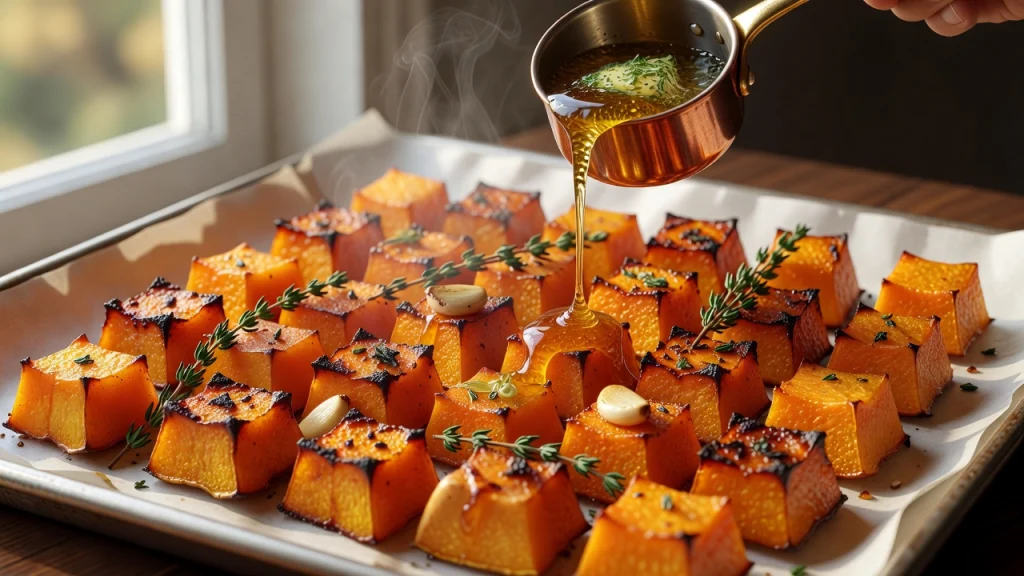
Peel the butternut squash, remove the seeds, and cut into uniform 1-inch cubes — even sizing ensures every piece roasts at the same rate for perfectly consistent caramelization across the entire batch. Toss generously with olive oil, salt, black pepper, fresh thyme leaves, and a small pinch of cinnamon, then spread in a single uncrowded layer on a large parchment-lined baking sheet. Roast at 425°F (220°C) for 25 to 30 minutes, flipping once at the halfway point, until every cube is deeply golden on the outside and completely tender within.
While the squash roasts, melt butter in a small pan over medium heat until it turns golden brown and smells nutty, then add whole fresh sage leaves and fry for 30 seconds until crisp. Drizzle this extraordinary brown butter and crispy sage over the finished roasted squash immediately before serving — it is the finishing touch that transforms this simple roasted butternut squash recipe into something that tastes genuinely restaurant-worthy and deeply memorable.
💡 Pro Tip: Never crowd the squash cubes on the baking sheet — pieces touching each other steam rather than roast and never develop the deep golden caramelization that makes this recipe so visually beautiful and deeply flavorful. Use two baking sheets if needed to ensure every piece has clear space around it.
Recipe 3 — Butternut Squash Pasta with Brown Butter
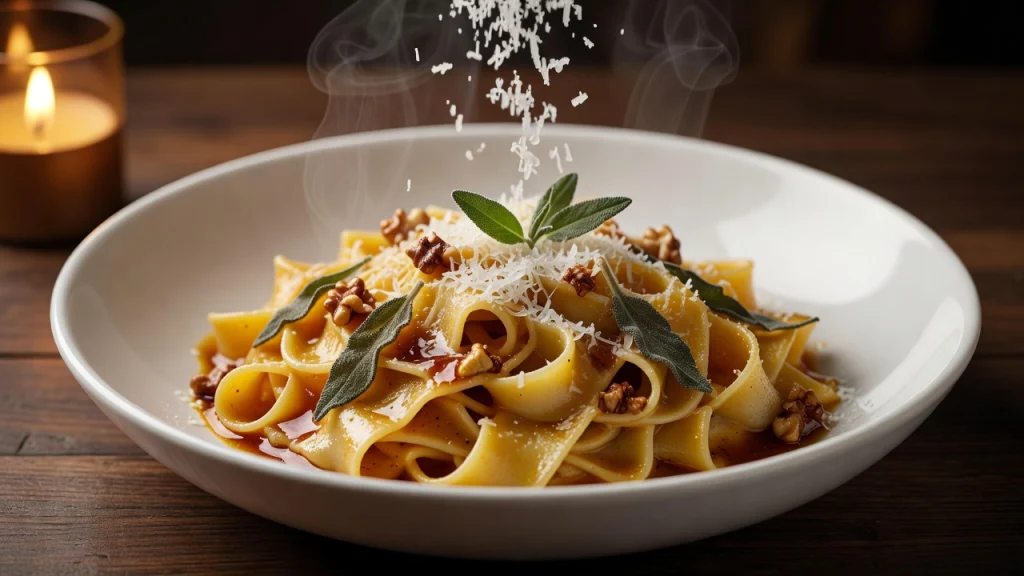
Blend roasted butternut squash flesh with warm vegetable broth, a squeeze of roasted garlic, and a pinch each of cinnamon, nutmeg, salt, and pepper until completely smooth and silky. Cook your pasta — pappardelle or rigatoni both work beautifully — to al dente in generously salted water, reserving one cup of starchy pasta water before draining. Toss the drained pasta with the butternut squash sauce, adding pasta water gradually until the sauce coats every strand in a beautiful, thick, golden layer.
Brown butter in a small pan until deeply nutty and golden, add crispy fried sage leaves, and drizzle generously over the plated pasta. Finish with a snow of freshly grated parmesan, toasted walnuts for crunch, and extra cracked black pepper. This quick butternut squash recipes for fall dinner option is ready in 25 minutes using leftover roasted squash and is one of the most elegantly satisfying pasta dishes of the entire season.
💡 Pro Tip: The reserved pasta water is essential for this recipe — add it one tablespoon at a time while tossing the pasta through the squash sauce until you achieve a perfectly silky, flowing consistency that coats every strand without being watery or too thick.
[AD BREAK 2]
Recipe 4 — Stuffed Butternut Squash with Herbs and Cheese

Halve the butternut squash lengthwise, scoop out the seeds, brush the cut surfaces with olive oil, season generously, and roast cut-side up at 400°F (205°C) for 35 to 40 minutes until the flesh is tender and the edges have caramelized to a beautiful golden amber. While the squash roasts, prepare the filling — cooked wild rice, dried cranberries, toasted pecans, sautéed spinach, fresh thyme, and crumbled feta cheese tossed together in a small bowl.
Scoop a little of the roasted squash flesh from each half, mix it into the filling for extra flavor and creaminess, then heap the stuffing generously back into each cavity above the rim. Return to the oven for 10 minutes until everything is heated through and the cheese on top has melted and begun to bubble. This is the most visually stunning of all the best butternut squash recipes on this list and the one that genuinely impresses every guest at the table.
💡 Pro Tip: Do not scoop out too much of the roasted squash flesh when creating the cavity for the filling — leave at least a half-inch border of flesh all the way around to maintain the structural integrity of the squash shell so it holds its beautiful shape when plated and served.
Recipe 5 — Butternut Squash Risotto
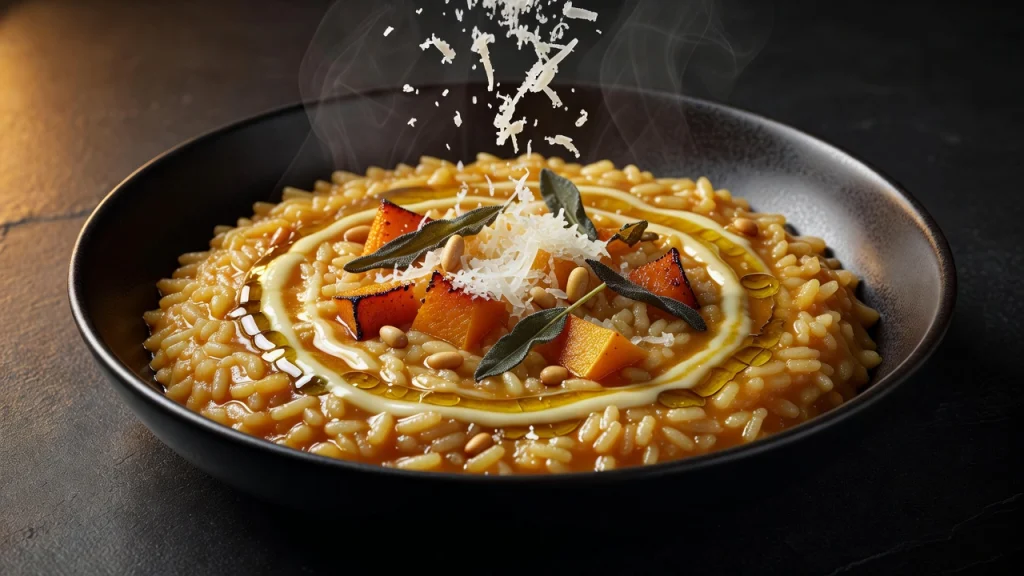
Sauté finely diced white onion in butter and olive oil until soft and translucent, then add arborio rice and toast for 2 minutes until the grains turn slightly opaque and smell lightly nutty. Add warm vegetable broth one ladle at a time, stirring continuously and adding the next ladle only when the previous one is fully absorbed — this patient, continuous stirring is what releases the rice’s natural starch and creates the characteristic creamy, velvety texture of a perfect risotto after 18 to 20 minutes.
Fold in the roasted butternut squash purée alongside a generous handful of freshly grated parmesan and a cold knob of butter stirred in off the heat for extra richness and gloss. Season generously with salt, black pepper, and fresh thyme, then plate immediately in deep bowls topped with crispy fried sage, toasted pine nuts, and extra parmesan. This homemade butternut squash recipe is the most luxurious and deeply satisfying entry in this entire collection and the one that feels genuinely special every single time.
💡 Pro Tip: The cold butter stirred into the finished risotto off the heat — a technique called mantecatura in Italian cooking — is the professional secret that gives restaurant risotto its characteristic glossy, creamy, wave-like consistency. Never skip this step and always use cold butter straight from the refrigerator for the best emulsification result.
Make It Your Own
If you prefer a dairy-free version of the butternut squash soup, try swapping the heavy cream with full-fat coconut cream — it creates an equally velvety, luxuriously smooth texture with a subtle tropical sweetness that pairs beautifully with the warming spices and caramelized squash.
If you enjoy a spicier, more exciting flavor in your roasted butternut squash, try adding a generous pinch of smoked paprika, cayenne pepper, and ground cumin to the seasoning before roasting — the warm, smoky spice profile transforms the sweet squash into something bold, exciting, and completely different.
If you prefer adding more protein to the stuffed butternut squash for a complete standalone meal, try mixing cooked lentils or chickpeas into the wild rice filling — they add a hearty, protein-packed substance that makes this dish a genuinely complete dinner that requires nothing else on the table.
Common Mistakes to Avoid
- Under-seasoning the Squash — Butternut squash needs confident, generous seasoning at every stage — before roasting, during cooking, and again after blending. An under-seasoned squash dish always tastes flat and disappointing regardless of how perfectly everything else was executed.
- Roasting at Too Low a Temperature — Butternut squash needs a minimum of 400°F to develop proper caramelization. Lower temperatures produce soft, pale, steamed squash without any of the golden color and concentrated flavor that makes these easy butternut squash recipes so beautiful and deeply satisfying.
- Skipping the Roasting Step — Boiling butternut squash instead of roasting it produces a waterlogged, pale, muted result with a fraction of the flavor. Always roast for the deepest caramelization, the most concentrated sweetness, and the most vibrant golden color in every recipe.
- Not Blending Long Enough for the Soup — A butternut squash soup blended for less than 60 seconds will have a slightly grainy, unpleasant texture. Always blend for a full 60 to 90 seconds on high speed for a genuinely silky, restaurant-quality smoothness that makes every bowl look and taste extraordinary.
Serving Suggestions

- With Thick Toasted Sourdough — A generously thick slice of golden toasted sourdough bread served alongside the creamy butternut squash soup is the most perfect, satisfying pairing imaginable — ideal for scooping up every last drop of the velvety golden soup from the bowl.
- As a Thanksgiving Side Dish — The roasted butternut squash with sage butter and the stuffed butternut squash both make extraordinarily beautiful Thanksgiving side dish additions that look like genuine showstoppers on any holiday table alongside roasted turkey and cranberry sauce. [LINK TO RELATED POST 1: “Best Thanksgiving Side Dish Recipes for Your Holiday Table”]
- As a Fall Dinner Recipe Centerpiece — Stuffed butternut squash served whole on a large rustic wooden board makes a genuinely impressive, visually stunning fall dinner recipe centerpiece that works beautifully for casual entertaining where you want maximum visual impact with minimum kitchen stress.
- With a Simple Green Salad — A crisp, lightly dressed arugula salad with lemon and olive oil alongside any of these roasted butternut squash recipes adds a refreshing, peppery contrast that cuts through the natural sweetness of the squash and makes the overall meal feel complete and balanced.
- As a Warming Autumn Comfort Food Bowl — Serve the butternut squash risotto in deep, warm ceramic bowls on a cold autumn evening with a glass of warm apple cider and a crusty bread roll — the most genuinely comforting, soul-warming autumn comfort food dinner imaginable.
- For Meal Prep Lunches — Portion the roasted butternut squash soup into individual glass jars at the start of the week for five days of effortless, genuinely nourishing, deeply satisfying lunches that reheat in the microwave in under 2 minutes with zero additional preparation required.
[AD BREAK 3]
Tips for Best Results
- Always Roast at High Heat — A minimum oven temperature of 400°F to 425°F is essential for developing the deep golden caramelization that gives every butternut squash recipe its extraordinary sweetness, beautiful color, and concentrated flavor. Lower temperatures produce pale, steamed results that miss the entire point of roasting entirely.
- Season at Every Single Stage — Butternut squash is a generous, forgiving vegetable but it requires confident, layered seasoning at every stage of cooking — before roasting, during blending, and again just before serving. This layered approach builds a depth of flavor that last-minute single-stage seasoning can never achieve.
- Use a Sharp, Heavy Chef’s Knife — Butternut squash is one of the firmest vegetables to cut safely, and using a dull or lightweight knife is both inefficient and genuinely dangerous. Always use a sharp, heavy chef’s knife and stabilize the squash on a non-slip cutting board before making any cuts for the safest and most controlled result.
- Save the Seeds for Toasting — Rinse the butternut squash seeds under cold water, pat completely dry, toss with olive oil, salt, and your favorite spice blend, and roast at 325°F for 15 minutes until golden and crunchy. They make an extraordinary garnish for the soup and an incredibly addictive snack on their own.
- Blend the Soup Immediately While Hot — For the smoothest, most velvety butternut squash soup texture, always blend while the soup is still very hot — hot liquids blend to a much silkier consistency than cooled ones. If using a standard blender rather than an immersion blender, always vent the lid and cover with a folded kitchen towel to prevent dangerous pressure build-up.
Storage Tips
Refrigerator
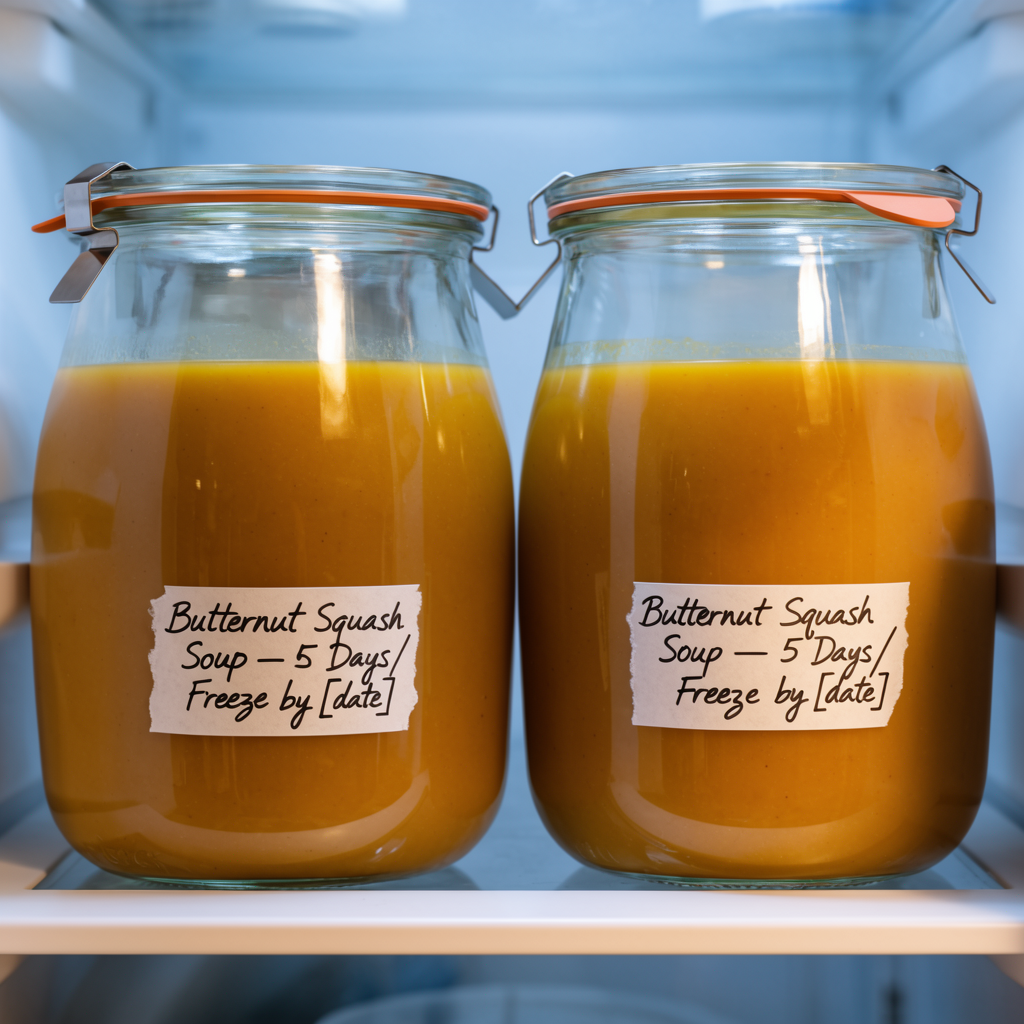
Store all butternut squash recipes in airtight containers in the refrigerator for up to 5 days — one of the longest storage windows of any homemade soup or vegetable dish. The soup actually deepens in flavor after one to two days in the refrigerator as all the roasted squash, garlic, and spice notes continue to meld together beautifully. Always reheat gently with a small splash of broth added to restore the original flowing consistency if the soup has thickened during storage.
Freezer
The butternut squash soup and pasta sauce freeze exceptionally well for up to 3 months — making them the ideal batch-cooking candidates for stocking your freezer with deeply satisfying, genuinely homemade autumn comfort food meals. Allow to cool completely before portioning into freezer-safe containers or zip-lock bags with as much air removed as possible. Thaw overnight in the refrigerator and reheat gently on the stovetop with a small amount of broth or water stirred in to restore the original silky consistency.
Reheating
Reheat butternut squash soup on the stovetop over medium-low heat, stirring gently and adding splashes of vegetable broth to loosen the consistency back to its original silky, flowing character. Always taste and re-season after reheating — a small pinch of salt and an extra drizzle of cream restores the soup almost completely to its original vibrant, deeply flavored freshness. Microwave reheating works well in 90-second intervals on medium power — stir between each interval and add a splash of broth before heating to prevent the soup from thickening and spattering.
Frequently Asked Questions
Q: How do I peel butternut squash easily without struggling?
A: The easiest method is to microwave the whole uncut squash for 3 to 4 minutes first — this softens the tough outer skin just enough to make peeling with a standard Y-shaped vegetable peeler smooth, safe, and effortless. Alternatively, roast the squash halved and unpeeled, then simply scoop the cooked flesh away from the skin with a large spoon after roasting — this method completely eliminates the peeling step for all soup-based butternut squash recipes entirely.
Q: Can I make butternut squash soup without a blender?
A: Yes — a potato masher works perfectly for a more rustic, textured soup with visible pieces of squash throughout rather than a completely smooth result. Mash directly in the pot, adding warm broth gradually until you reach your preferred consistency. An immersion blender is the most convenient and safest option for a smooth soup — it blends directly in the pot with zero hot liquid transfers and minimal cleanup required afterward.
Q: How do I know when butternut squash is fully roasted?
A: A properly roasted butternut squash is completely tender when pierced easily all the way through with a thin knife or skewer with zero resistance, the cut surface has developed a deep golden-amber caramelization with slightly darker edges, and the natural juices have concentrated into small, glossy, amber pools around the edges of the pan. For these best butternut squash recipes for beginners, the visual caramelization is the most reliable indicator — pale, unstained flesh means more roasting time is needed.
Q: Can I prepare butternut squash recipes ahead of time for Thanksgiving?
A: Absolutely — and advance preparation is strongly recommended for stress-free holiday cooking. The soup can be made up to 3 days ahead and stored refrigerated, actually improving in flavor as it sits. Roasted squash cubes keep well refrigerated for 4 days and reheat beautifully in a 400°F oven for 8 minutes. The stuffed squash can be fully assembled and refrigerated up to 24 hours ahead, then baked directly from the refrigerator adding 10 extra minutes to the baking time for a genuinely effortless Thanksgiving side dish experience.
Final Thoughts
These butternut squash recipes represent everything that makes autumn cooking so genuinely special — the warmth, the deep caramelized sweetness, the comforting golden color, and the extraordinary versatility of one incredible seasonal ingredient that delivers something beautiful and satisfying no matter how you choose to cook it. From the silky, velvety soup to the deeply flavorful risotto, each recipe in this collection celebrates butternut squash at its most delicious, most nourishing, and most genuinely impressive.
Whether you are making the creamy roasted soup as a cozy fall dinner recipe on a quiet October evening, serving the stuffed squash as the centerpiece of your Thanksgiving side dish table, or batch-cooking several recipes on a Sunday afternoon to stock your refrigerator with a week of extraordinary autumn comfort food — this collection has everything you need to make the most of butternut squash season in your kitchen. Once you master the fundamental technique of roasting squash cut-side down at high heat, every recipe on this list becomes completely effortless and deeply rewarding.
Make one recipe this weekend, then work through the entire collection as autumn deepens and the evenings grow cooler and crisper. If you loved these recipes, you will also adore these [Best Fall and Winter Comfort Food Recipes for the Whole Family] for even more warming, nourishing, seasonal inspiration to carry you through the entire season. Save this collection for your next autumn cooking day — and share it with someone you love! 🎃🧡
Creamy Roasted Butternut Squash Soup
Ingredients
Method
- Group: Roast the Squash
- Step 1 — Prepare and Roast
- Preheat oven to 400°F (205°C). Brush cut surfaces of butternut squash halves generously with olive oil. Season with salt, pepper, cinnamon and nutmeg. Place cut-side down on a lined baking sheet alongside the garlic head. Roast 40–45 minutes until completely tender and cut surfaces are deeply caramelized amber.
- Group: Make the Soup
- Step 2 — Blend the Soup
- Cool slightly, then scoop the roasted squash flesh into a blender. Squeeze the soft roasted garlic directly from the head into the blender. Add warm broth and heavy cream. Blend on high speed for 60–90 seconds until completely smooth and velvety. Season to taste with salt, pepper and extra cinnamon.
- Step 3 — Make the Crispy Sage
- Melt butter in a small pan over medium heat until golden brown and nutty. Add sage leaves and fry 30 seconds per side until crisp. Remove immediately to a paper towel.
- Group: Serve
- Step 4 — Garnish and Serve
- Ladle hot soup into deep ceramic bowls. Swirl a small pour of cream across the surface. Place crispy fried sage leaves on top. Scatter toasted pepitas generously. Add a crack of black pepper and serve immediately with thick toasted sourdough bread.
Notes
with the hot pan caramelizes the cut
surface into a deep amber that gives
the soup its extraordinary depth. ✅ Roast at High Heat: Minimum 400°F for
proper caramelization. Lower temperatures
produce pale, steamed squash without
any golden color or concentrated flavor. ✅ Blend While Hot: Hot soup blends to a
much silkier consistency than cooled soup.
Always blend immediately for the most
velvety, restaurant-quality result. ✅ Storage: Refrigerate up to 5 days.
Flavor improves after 1–2 days.
Freeze up to 3 months in airtight
containers. Add broth when reheating. ✅ Make Ahead: Perfect for Thanksgiving —
make 3 days ahead and refrigerate.
Reheat gently on stovetop with
a splash of broth to restore consistency. ✅ Dairy-Free: Swap heavy cream with
full-fat coconut cream for an equally
velvety, deeply satisfying result
with a subtle tropical sweetness.